Blog
Woven vs Satin Labels: Which Should You Choose?
We compare look, feel, wash durability, detail, color and cost, then show which label suits each type of garment, from neck labels to care labels.
Etiket.az team 7 min read
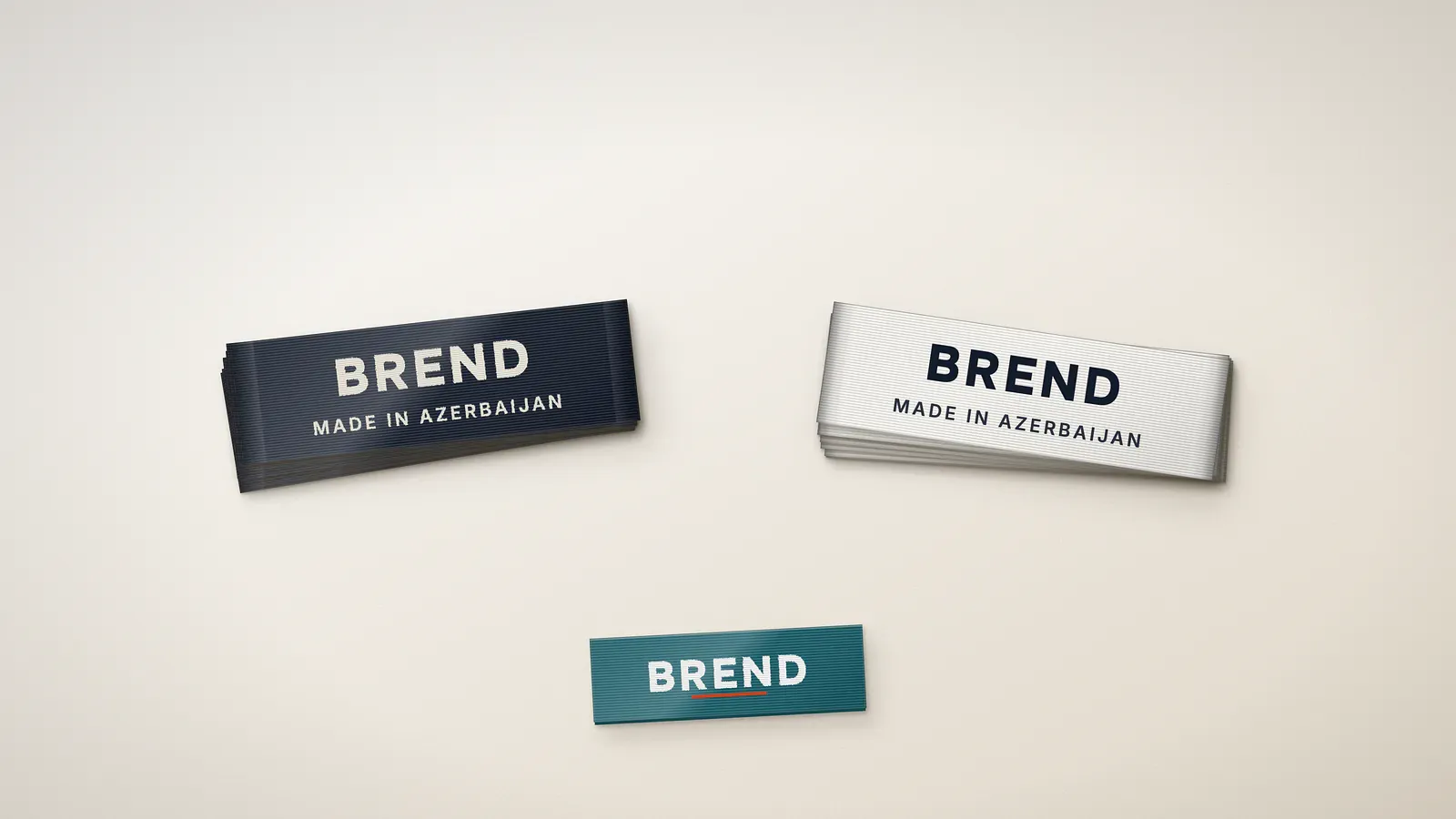
The choice of woven vs satin labels affects how a garment looks, how long the label lasts and what the order costs. In short, woven labels look more premium and survive washing better. Printed satin labels, on the other hand, feel softer, reproduce small text more crisply and usually cost less.
Below, we compare both types on look, durability, detail and price. We then finish with practical advice for different garments. You can order either type from us in Baku: see woven labels and care labels for full specs.
Woven Labels in Brief
On a woven label, colored threads, not ink, form the logo and text. Mills weave them on Jacquard looms that build the design thread by thread. Because the color sits inside the yarn, it doesn’t fade or rub off.
Damask is the most popular quality: its dense, smooth, matte surface holds fine detail well. In addition, satin weave adds more sheen, while taffeta looks simpler and costs less. A standard woven label uses two colors, though more are possible.
Brands usually sew woven labels into the back neck along both short edges. Laser cutting seals the edges, so the label doesn’t fray.
Printed Satin Labels in Brief
A satin label carries printed text on a smooth, glossy ribbon. The tape feels like silk because it is thin, soft and flexible. As a result, a satin label stays comfortable even against bare skin.
The printing method depends on the run and the design. Most satin labels carry one ink color, often black or navy. Hot-knife cutting usually seals the edges, so the tape keeps a clean finish.
For care labels, we offer two materials: English satin and nylon taffeta, known locally as “Japanese akmaz.” Taffeta also takes print well, but it is stiffer and feels closer to paper. This article compares woven labels with satin specifically.
Look and Feel: Woven vs Satin Labels
You can spot a woven label by its subtle texture, because the threads themselves create the design. It is denser and slightly stiffer, which gives a garment a premium look.
A satin label, by contrast, is completely smooth with a soft sheen. In the hand, it feels like silk ribbon.
| Factor | Woven label | Satin label |
|---|---|---|
| Surface | Subtle texture, thread-built design | Smooth, soft sheen |
| Feel | Dense, slightly stiff | Soft, flexible |
| Color | Inside the yarn, won’t fade | Ink on the surface |
| Small text | Limited: letters about 2 mm tall or larger | Finer detail possible |
| Wash durability | Very high | Good, but print can fade over time |
| Typical placement | Neck, pocket, accessories | Side seam, underwear, babywear |
| Minimum order | 1,000 pcs | Confirmed in your quote |
Durability and Washing
Between woven and satin labels, woven wins on durability. The color lives in the yarn, so the logo stays sharp after many washes. That is why most brands choose woven for their main neck label.
On a satin label, the ink sits on the ribbon’s surface. On good material the print stays legible for a long time. However, hot washes, harsh detergents and friction can gradually wear it down. Therefore, the right ink and ribbon matter more with satin.
Detail and Color Limits
On a woven label, thread thickness limits every detail. In practice, letters smaller than about 2 mm can blur together, and we may need to thicken very thin lines. Gradients and photo effects don’t work in weaving either.
Color works differently too. For woven labels, we pick shades from a thread catalog and match your Pantone code to the closest yarn. Printing on satin matches ink colors more precisely, but most runs use only one or two colors.
So if your label needs a lot of text, satin is the easier choice. For example, fiber content, care label symbols and care instructions in several languages fit on a small ribbon only with print.
Sizes, Cuts and Attachment
You can order a woven label in any size. Still, our standard sizes are 20×30, 15×50, 20×60, 25×70 and 40×40 mm. The minimum width is 15 mm. A label can carry just the logo. However, brands often add the size, a country line such as “Made in Azerbaijan” or a short fiber content line.
- Straight cut: you stitch the label flat along its edges, which makes it the most versatile option.
- Center fold: the label goes into the seam as a loop. We often see this format on care labels and on upholstered furniture.
- Laser cut: it seals the edges of a woven label, so the threads don’t unravel.
For a satin label, the amount of text mostly sets the size. For example, a care label with content in three languages and five care symbols naturally runs longer. That is why we choose the ribbon width and label length with you at the proof stage.
Price and Minimum Order
Quantity, size, number of colors and finishing all affect the price. Woven labels start at 1,000 pieces, because setting up the loom and preparing the yarn takes time. As the quantity grows, the unit price drops noticeably.
Satin labels usually cost less, especially with single-color print. Their minimum order depends on the product, so we confirm it in your quote. We explain the full pricing logic in our guide to custom label cost.
When it comes to price, woven vs printed labels differ mainly because of these factors:
- quantity and number of designs
- label size and shape
- number of colors and any gold or silver thread
- fold, cut and backing
- material: damask, satin or taffeta
Preparing Artwork for Woven or Satin Labels
For both types, send your logo as a vector file: AI, PDF, EPS or SVG. If you only have a JPG or PNG, we will sort it out together at the proof stage.
- Keep text short on woven labels and avoid letters smaller than 2 mm.
- Specify colors as Pantone codes, since we match thread from a catalog, not from CMYK.
- For satin labels, finalize the content text, symbols and languages in advance.
- Print the proof at 100% scale and hold the label against the garment.
For more on file setup, see our label artwork guidelines.
Which Is the Best Clothing Label Type for Your Garment?
It depends on the label’s job. A brand label needs to stand out, while an information label should stay unnoticed against the skin. These rules of thumb make the decision easier:
- Neck and logo labels: choose woven, since it keeps its shape and color wash after wash.
- Care and composition labels: satin or taffeta works better, because it fits a lot of text in a small space.
- Underwear, babywear and sportswear: soft satin won’t irritate the skin.
- Premium collections and accessories: damask, with gold or silver thread if you like.
- Small test runs: satin is often the more affordable way to start.
Many brands use both: a woven label at the neck and a satin care label in the side seam. To see how a full set fits together, browse our clothing labels.
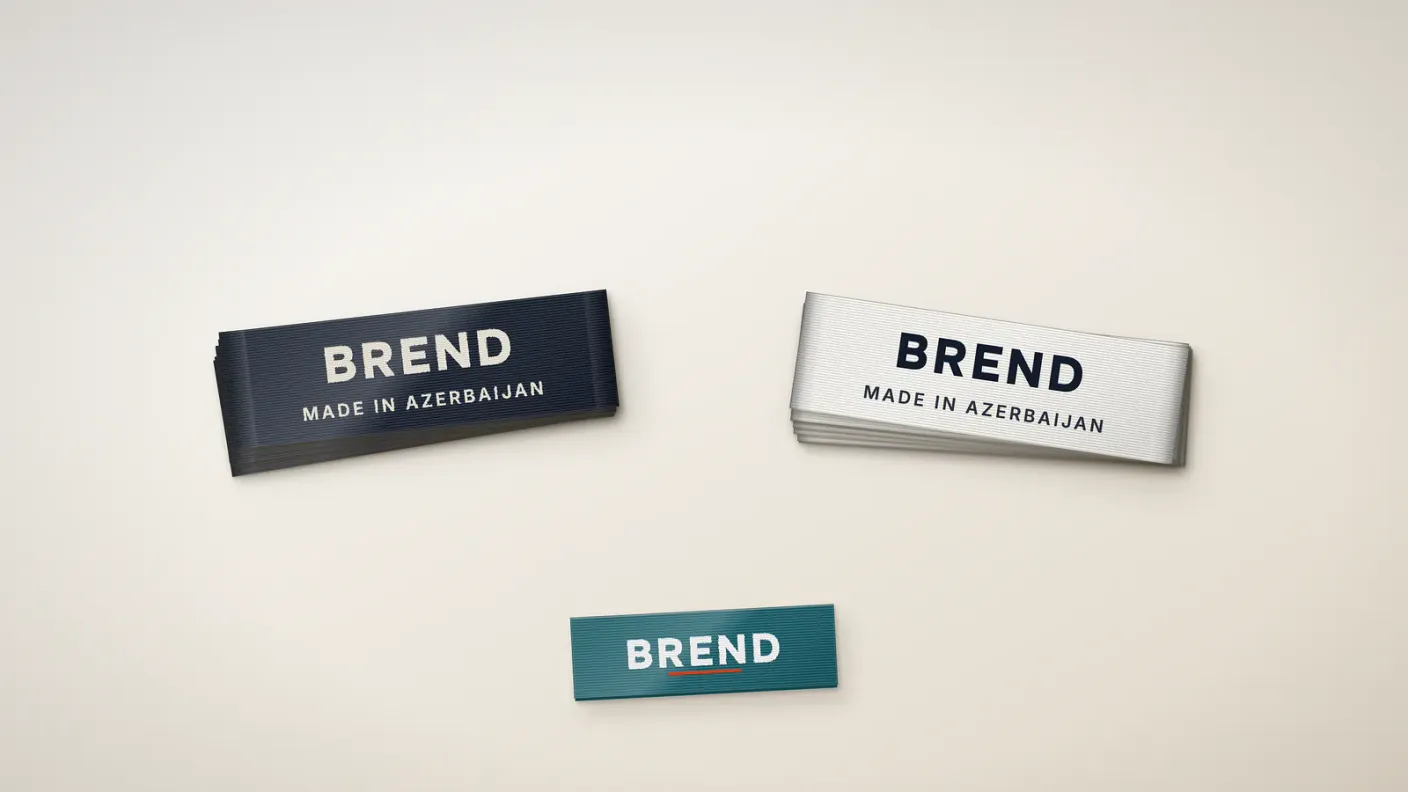
Order Samples or a Full Run
Etiket.az has made labels for manufacturers in Azerbaijan since 2014. Whether you choose woven or satin labels, our team guides you from brief to finished labels. We produce some label types at partner factories in Türkiye, while our Baku office handles your order and design.
Step 1: Send your brief
Share your logo, size, quantity and label placement. A vector file (AI, PDF, EPS or SVG) gives the best result.
Step 2: Advice and quote
Our design advice is free, and on business days we send a quote within 24 hours.
Step 3: Approve the proof
You check the digital proof at 100% scale, and we make any changes.
Step 4: Production
After approval, we start production. For woven labels, this takes roughly 10–15 business days.
Need hang tags or tag pins as well? You can combine everything in one order.
Woven vs Satin Labels: FAQ
Which label lasts longer?
Are satin labels cheaper?
Which is better for small text?
Can I weave a care label?
Do satin labels irritate the skin?
Let’s Pick Your Label Together
Send us your logo and garment type, and we will tell you whether woven or satin labels suit it best. Expect a quote within 24 hours on business days.
Related product
Custom Woven Labels
Want to order the label discussed in this article?