Blog
How VOID Labels Work
The layers inside a tamper-evident seal, residue vs non-residue types, why a VOID hologram adds protection, where brands use VOID labels and how to choose yours.
Etiket.az team 7 min read
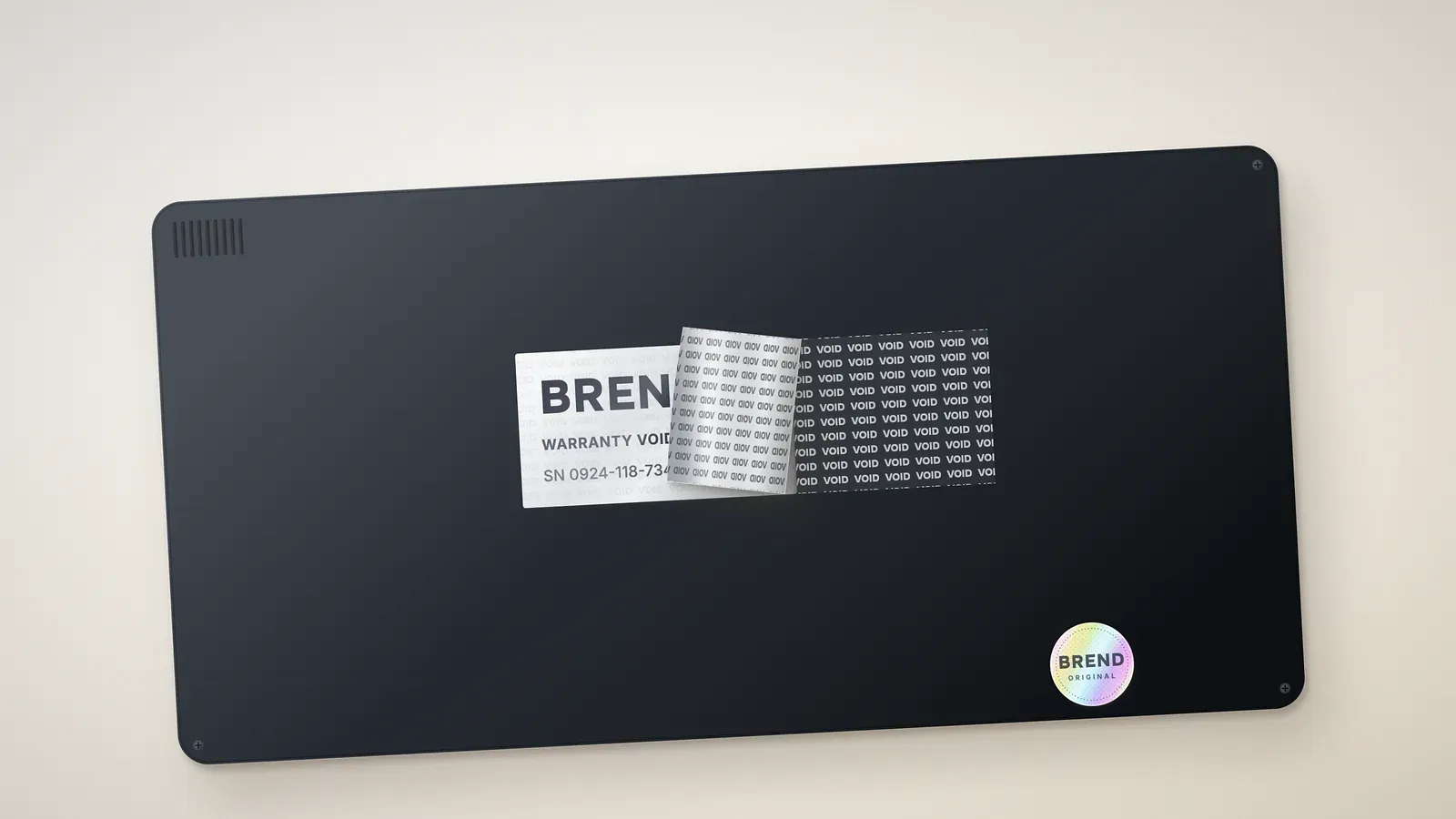
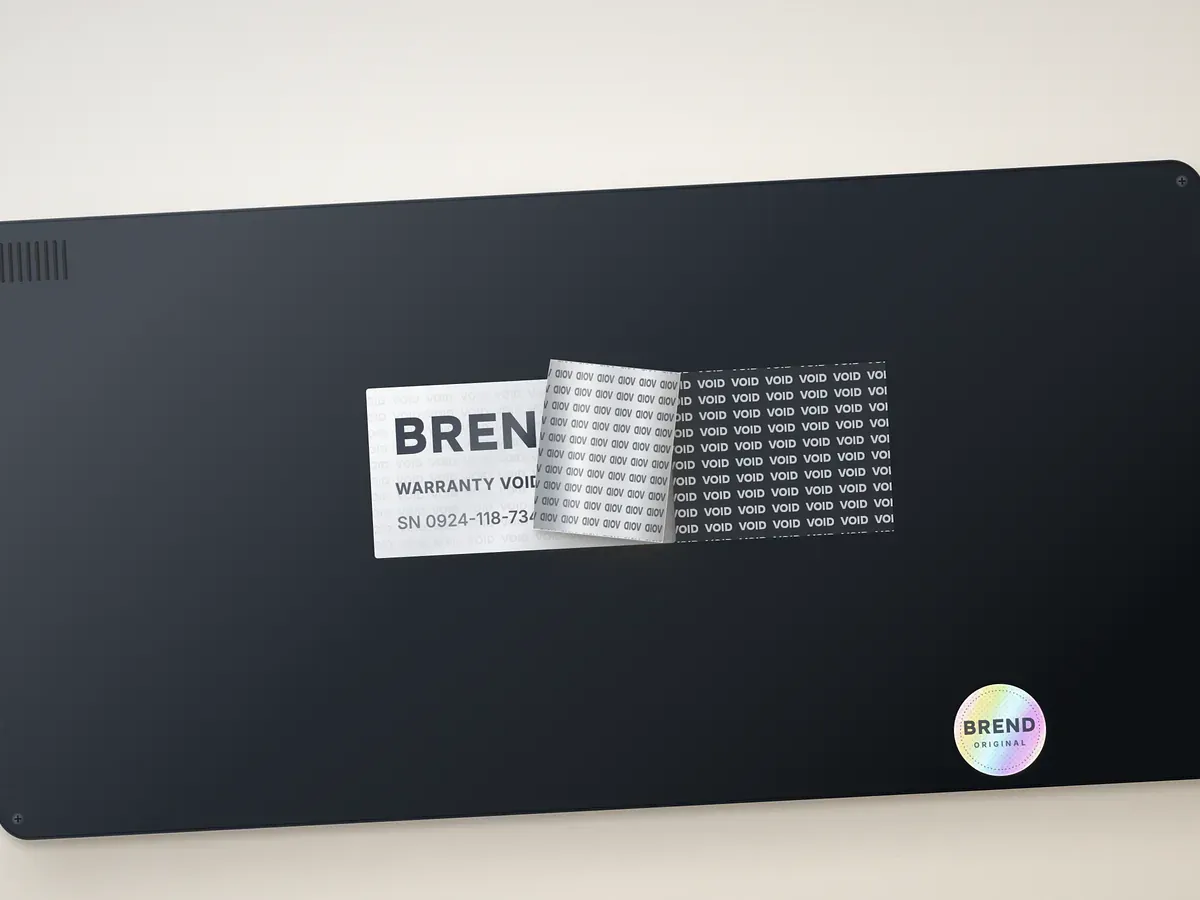
VOID labels work on a simple principle: when someone tries to peel one off, the adhesive layer splits in two. As a result, the word “VOID” stays on the surface. You cannot stick the label back without a trace, because the message does not disappear. So a customer or a service technician sees right away that someone opened the package or device. That is why brands use VOID labels as warranty seals and as tamper-evident closures for boxes and documents.
Etiket.az has made labels in Baku since 2014, including VOID security labels and holographic seals. In this guide, we explain the mechanism in plain language, compare the main types and show you how to choose the right one.
What Tamper-Evident Labels Are
Tamper-evident labels have one job: if someone opens a package or a device without permission, they should not be able to hide it. The VOID label is the most common type in this category. Destructible vinyl labels and special security tapes belong here too.
However, there is one important distinction. A VOID label does not prevent opening. Instead, it makes opening visible. That is why brands often combine it with other anti-counterfeiting measures, such as a hologram, a serial number or a custom design.
How VOID Labels Work: The Layers
A VOID label consists of several thin layers:
- Face film. Silver, white or holographic PET film that carries your printed logo and text.
- Hidden pattern. A special release layer sits under the film in the shape of the word “VOID” or a diamond pattern.
- Adhesive. A strong adhesive holds the label in place and works together with the hidden pattern.
- Liner. A silicone-coated paper liner protects the adhesive until application.
When you peel the label, the adhesive lets go of the film wherever the pattern sits and stays on the surface. Everywhere else, it lifts away with the film. As a result, the word “VOID” or a pattern appears on the surface, while the label keeps a mirror image of it. Even if you press the label back down, the gaps do not close and the message stays readable.
In short, VOID labels work because of this two-part structure. Once the adhesive separates, nobody can return it to its original state.
Residue vs Non-Residue: How Each VOID Label Works
There are two main types, and the right one depends on your goal:
| Type | What happens when peeled | Advantage | Best for |
|---|---|---|---|
| Residue (full transfer) | The message stays on both the surface and the label | The clearest evidence of tampering | Cardboard boxes, single-use packaging, warranty seals |
| Non-residue | The message shows only on the label, the surface stays clean | No cleanup needed | Rental equipment, reusable containers, device housings |
The residue type shows tampering most reliably, because the evidence stays in two places at once. On the other hand, you will need alcohol or a dedicated cleaner to remove the message from the surface later. The non-residue type leaves the surface intact, but only the label itself shows the evidence. So if someone throws the label away, the proof goes with it.
Film Color: Silver, White or Holographic
The film color affects both the look and the printing options. Matte silver VOID film looks understated and makes it easy to print text and serial numbers. White film, in turn, gives a clean background for a color logo and a barcode. Holographic film looks the most striking and adds protection. Clear VOID film also exists on the market, and we confirm its availability in your quote. Either way, all VOID labels work on the same principle. The difference lies only in the look and the level of protection.
VOID Hologram Labels: Two Layers of Protection
A holographic VOID label combines tamper evidence with an optical effect. The surface shifts color at different angles, so copying it on a regular printer is hard. A counterfeiter therefore has to remove the seal and also fake the hologram. That is far harder than dealing with plain VOID film. For this reason, the VOID hologram is popular with cosmetics and electronics brands.
Simple hologram stickers, by contrast, are a separate category. They make a product look striking, but they leave no trace when peeled. So a simple hologram does not fully stop counterfeiting. Mostly, it supports your brand image. You can compare all types on our hologram stickers page.
To raise the level of protection further, you can add sequential or random numbering. A number makes every seal unique and simplifies warranty tracking.
Where Brands Use VOID Labels
- Electronics. Warranty seals over screws and housings. Learn more about our electronics labels.
- Cosmetics and fragrance. Authenticity seals across the box opening. Also see our beauty brand labels.
- Pharmacy and supplements. Seals that show the first opening of a package.
- Delivery. Courier bags and food delivery bags.
- Documents and certificates. Envelopes, archive boxes and certificates.
- Asset tracking. Numbered seals on office equipment and rental gear.
In every sector, the key question is the same: who can remove the label, and when? The answer decides the type, the size and where the label goes.
In some sectors, tamper evidence is a legal requirement. For example, the European Commission’s page on falsified medicines states that medicines in the EU must carry two safety features on the outer packaging: a unique identifier and an anti-tampering device. So if you package medicines or supplements, confirm the exact requirements with the regulator in your market.
Limits of VOID Labels and How to Choose
VOID labels work well, but they have limits. First, generic VOID film is easy to buy. So relying only on the standard “VOID” message does not fully protect you against counterfeits. That is why we recommend adding a logo, custom text, a number or a hologram to the label.
- Surface. On rough, porous, fabric or highly flexible surfaces, the effect turns out weak.
- Temperature. Adhesive grips poorly on cold surfaces, while strong heat can soften it.
- Shelf life. Adhesive properties can change during long storage, so avoid stockpiling too many labels.
- Reuse. A VOID label is single-use. Once you peel it, you cannot use it again.
Five Questions to Ask Before You Order
- What surface will the label go on: cardboard, plastic, metal or glass?
- Should the surface stay clean after opening, or should it show evidence too?
- Is plain VOID film enough, or do you need a hologram?
- Do you need a logo, custom text or sequential numbering?
- At what temperatures will you store and ship the product?
Once you answer these, we can choose the right size, film and adhesive together. A photo of the surface also makes the choice much easier.
How to Order VOID Labels
Step 1: Your brief
First, tell us where and why you will use the label, plus the approximate size and quantity.
Step 2: Film and pattern
Next, we choose holographic, silver or white film together, and a residue or non-residue effect.
Step 3: Quote
Within 24 hours on business days, we reply with the price, minimum run and lead time.
Step 4: Approval and production
After you approve the proof, we produce the run and arrange the handover with you.
For holographic VOID labels, the minimum run is usually between 1,000 and 5,000 pieces, and production can take about 10–12 days. Exact terms depend on the film, size and customization, so we spell them out in your quote. In addition, our free consultation helps you adapt the artwork to your security needs.
How VOID Labels Work: FAQ
Can a VOID label be re-applied?
Are VOID labels heat resistant?
Where are VOID labels used?
Residue or non-residue: which should I choose?
Can we replace the word VOID with our own text?
What is the minimum order for VOID labels?
Protect your products with VOID labels
Send us a photo of the surface and your approximate quantity. We offer a free consultation and reply with a quote within 24 hours on business days.
Related product
VOID Security Labels (Tamper-Evident)
Want to order the label discussed in this article?