Blog
Jacron vs Leather Patch: Which Is Right for Your Jeans?
What jacron is made of, how it holds up in the wash, how it compares with genuine leather, PU and PVC, and which patch fits your denim line and budget.
Etiket.az team 8 min read
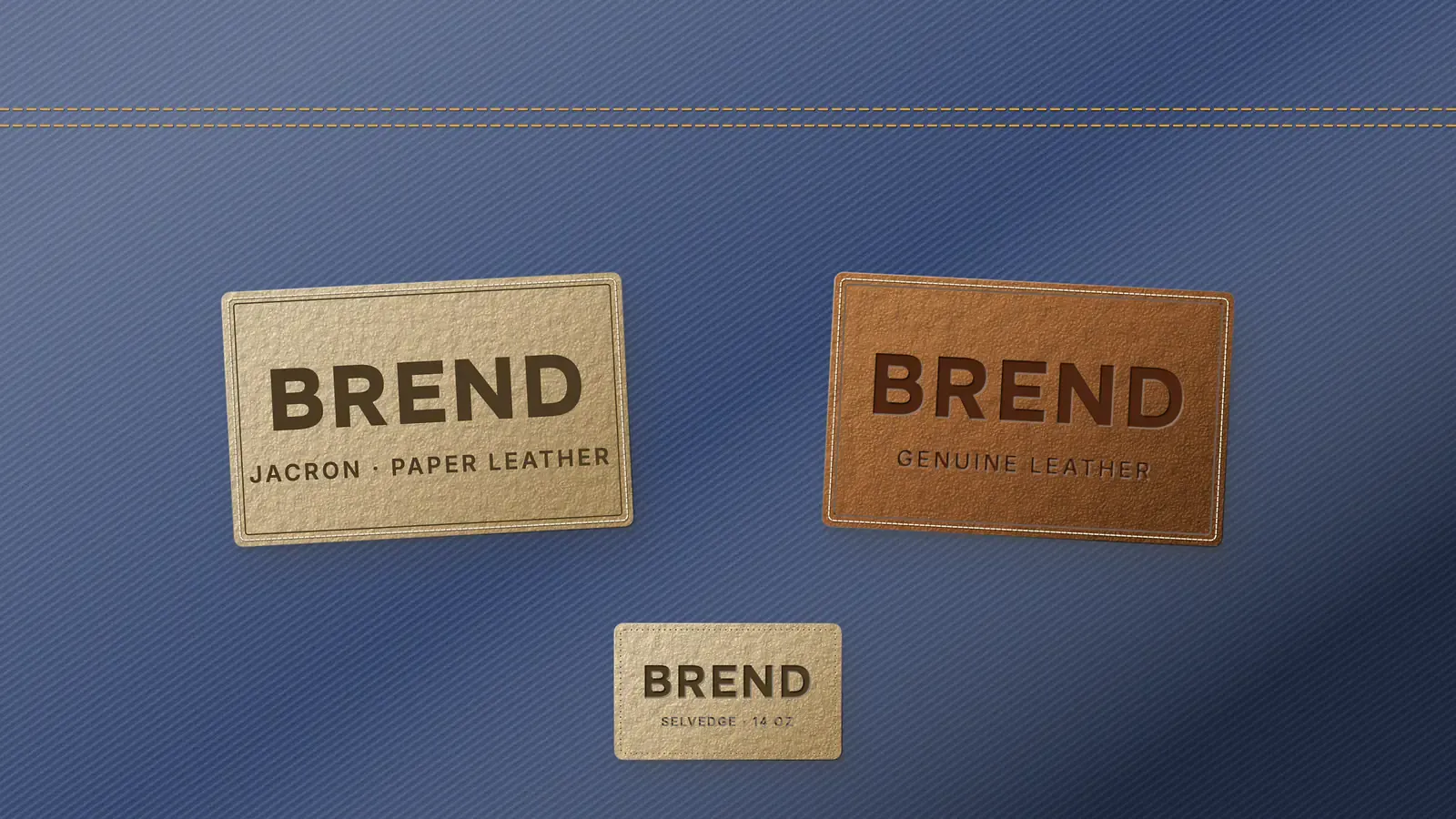
The jacron vs leather patch decision comes down to budget, look and how long the garment needs to last. Jacron is a dense, paper-based material that looks like leather but costs noticeably less. You will see it most often on the back waistband of jeans. It also survives normal washing and takes color printing well. However, genuine leather still wins on feel, lifespan and prestige.
In this guide, we explain what goes into jacron and how brands put a logo on it. We also look at how it behaves in the wash. Then we compare it with genuine leather, PU and PVC. Finally, we share a simple rule for choosing the right patch for your denim line. Etiket.az has made labels for clothing brands in Baku since 2014, including custom jacron patches. So this advice comes from daily production work, not theory.
What Is Jacron?
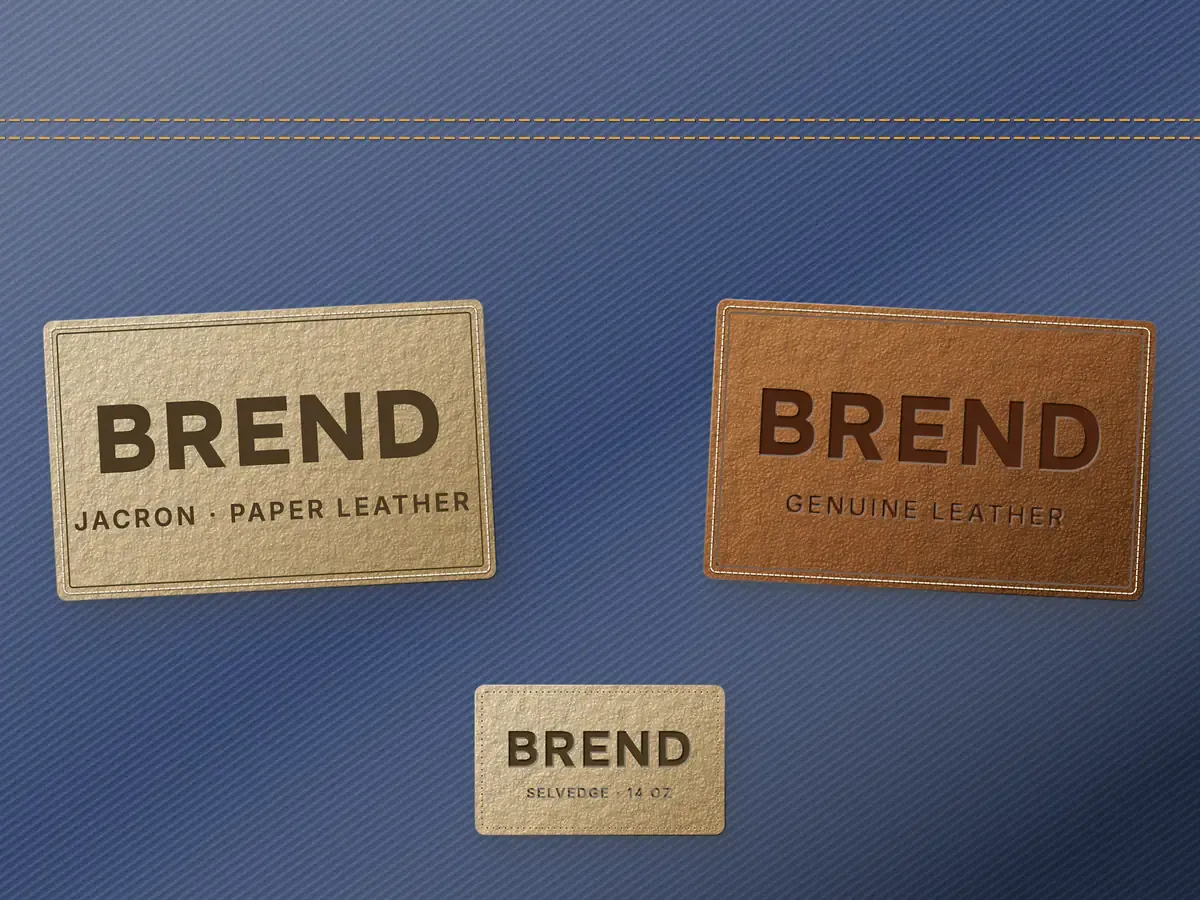
Jacron is a cellulose-based material, so it starts from the same raw fiber as paper. Manufacturers saturate the fibers with a polymer binder and press them into a dense sheet. As a result, the material does not fall apart in water and resists tearing. Then the surface gets a leather-like grain and color. From a few steps away, a jacron patch on a waistband easily passes for leather.
Jacron feels smooth and slightly firm. It has neither the pores nor the smell of real hide. In addition, it typically contains no animal-derived materials, so some brands choose it for vegan collections. Suppliers often list it as jacron paper or simply a paper patch.
How Jacron Patches Are Made
A typical production run goes through five stages:
- Artwork. We prepare the logo as vector art (AI, PDF, EPS or SVG) and confirm the size and shape.
- Die. We make a metal stamping die, because the die creates the relief.
- Stamping and printing. A heated die presses the logo into the material, and we add color printing if needed.
- Cutting. A cutting die shapes the patch into a rectangle, an oval or the outline of your logo.
- Inspection and packing. We count the patches, pull any defects and pack the order.
Logo Techniques on Jacron
The classic option is heat debossing, where the die sinks the logo slightly into the surface. Jacron also accepts printing in any color. Color hot stamping, meanwhile, combines relief and color in a single pass. For extra shine, some brands choose foil stamping. However, very thin lines and tiny text can disappear in the relief, so we simplify the artwork before production.
Jacron vs Genuine Leather: Key Differences
A jacron patch and a leather patch do the same job on a pair of jeans, but they behave differently. Genuine leather comes from tanned animal hide, so every piece has its own grain. Jacron, by contrast, is a uniform industrial material. The table below sums up the main differences.
| Feature | Jacron | Genuine leather |
|---|---|---|
| Base | Cellulose fibers and binder | Tanned animal hide |
| Look | Even grain, vintage creases after washing | Natural grain, develops a patina over time |
| Feel | Smooth, slightly firm | Soft, warm, porous |
| Washing | Handles normal home washing | Needs low temperatures and gentle care |
| Lifespan | Medium | Long |
| Cost | Budget-friendly, even lower at volume | Higher |
| Best for | Mass-market denim, workwear, youth lines | Premium denim, bags, leather goods |
In short, jacron gives you the leather look for less money. On the other hand, genuine leather signals a premium position and offers a softer feel and a longer life. Also keep the naming rules in mind. Euroleather, which represents the European leather industry, points out that substitutes are not leather. According to Euroleather, calling them leather is illegal in EU member states and other countries. So never describe a jacron patch as leather in your product copy. If you want the real thing, see our custom leather labels.
Jacron vs PU Leather and PVC
When brands look for a leather-look patch, they usually compare four options. Besides genuine leather and jacron, PU (faux) leather and rubber PVC patches are common. Each one has its strengths:
- PU or faux leather. A synthetic material that takes a heat-stamped logo. It has an even surface and costs less than genuine leather, but it may crack over the years.
- PVC. A flexible patch molded from soft PVC. It handles water and frequent washing best, and it comes on colored or clear backgrounds.
- Jacron. A paper base with a leather effect. It delivers the vintage denim look at the most reasonable cost.
- Genuine leather. The most premium choice, especially for bags and leather goods.
For example, PVC makes more sense for sportswear and kidswear because it survives heavy washing. On jeans, however, jacron and genuine leather remain the traditional choice. You can compare all of these side by side in our clothing labels catalog.
Washing and Durability: Jacron vs Leather
Jacron handles normal home washing and holds its color well. Still, the material softens and creases a little with every wash. On denim, that effect is usually a plus, because the patch ages together with the jeans. However, high heat, chlorine bleach and a hot iron can stiffen jacron or change its color. Genuine leather, in turn, can shrink and darken in hot water.
To help the patch last longer, give your customers a few simple care tips:
- Wash the garment inside out on a gentle cycle.
- Avoid bleach and aggressive stain removers.
- Iron only the surrounding fabric, never the patch itself.
- Skip high heat in the dryer.
These rules translate neatly into symbols on the garment’s sewn-in label. Our guide to care label symbols explains what each icon means.
Jacron vs Leather Patch: Cost Comparison
Jacron usually costs noticeably less than genuine leather, especially on large runs. However, quoting an exact percentage in advance would not be honest, because the price depends on several factors:
- Size and shape. A large or die-cut patch needs more material and a more complex cutting die.
- Technique. Debossing only, color printing, or both.
- Number of colors. Each extra color means extra setup.
- Order quantity. We make the stamping die and the cutting die once, so the unit price drops as the quantity grows.
That is why we can price a jacron patch and a leather patch side by side in one quote, at the same size and quantity. As a result, you see the real difference on your actual order. For more detail, read our guide to custom label cost.
Which Patch Should You Choose for Jeans?
Your price segment and your customers’ expectations drive the choice. Here is a simple rule of thumb:
- Mass-market denim. Jacron cuts costs and adds a vintage look.
- Premium or limited editions. Genuine leather reinforces your brand position.
- Workwear and sportswear. PVC is the safer choice for frequent washing.
- Vegan collections. Jacron or PU leather avoids animal-derived materials.
Some brands combine both. For instance, they use jacron on the core line and genuine leather on a premium fit. If you make bags, belts or accessories, also take a look at our leather goods labels.
How to Order: From Logo to Finished Patch
Step 1: Logo and size
First, send your logo as vector art (AI, PDF, EPS or SVG) and the approximate patch size.
Step 2: Material and technique
Next, we pick the jacron color and technique together: debossing, color printing or both.
Step 3: Quote
Within 24 hours on business days, we reply with the price, minimum quantity and lead time.
Step 4: Approval and production
Once you approve the artwork, we start production and agree on delivery with you.
The minimum order depends on size, technique and the number of colors, so we confirm it in your quote. In addition, our free design consultation helps you adapt the logo for stamping. You can write to us in English, Azerbaijani or Russian.
Jacron Patch FAQ
Is jacron made of paper?
Does jacron get damaged in the wash?
How much cheaper is jacron than leather?
Can you iron a jacron patch?
Is jacron suitable for vegan products?
What is the minimum order for jacron patches?
Ready to order jacron patches?
Send us your logo and approximate quantity. We offer a free design consultation and reply with a quote within 24 hours on business days.
Related product
Custom Jacron Patches for Jeans
Want to order the label discussed in this article?